de
de zh
zh fr
fr es
es tr
tr pt
pt nl
nl ru
ru uk
uk hi
hi
The cryptocurrency market is entering a zone of high turbulence. The primary factor of uncertainty in late January 2026 is the frantic effort by US lawmakers to prevent another federal government pause (shutdown). The funding deadline expires on January 30, and against this backdrop, Bitcoin (BTC) is showing signs of weakness, failing to meet the expectations of a "January rally."
Origin of the New Shutdown Threat in 2026
The risk of paralyzing the state apparatus arose because Congress failed to approve a package of budget bills for the 2026 fiscal year. The temporary funding that has sustained government operations in recent months ends at midnight on January 30. Negotiations between parties have reached a deadlock, with the budget for the Department of Homeland Security remaining the most contentious issue.
Current Market Reaction:
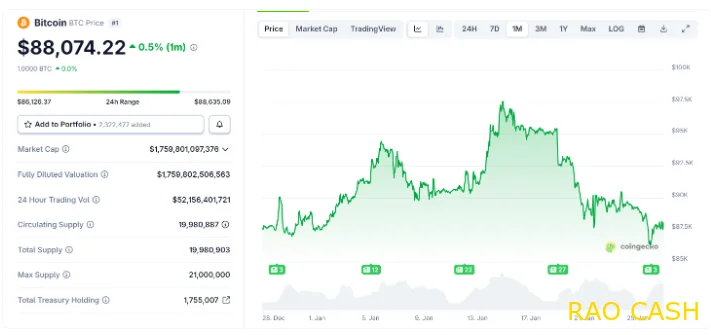
— Failed Rally: In mid-January, BTC attempted to stabilize in the $95,000–$98,000 range; however, growing uncertainty in Washington triggered a sharp downward correction.
— Deteriorating Sentiment: The Fear and Greed Index has shifted toward caution as investors fear a decrease in global liquidity in the event of a prolonged political crisis in the US.
Shutdown History: Bitcoin is Not a "Safe Haven"
Contrary to popular belief, historical data does not support Bitcoin's status as a protective asset during US government shutdowns. Statistics from recent years show that the primary cryptocurrency more often follows the general market trend, which is typically downward during moments of political chaos.
BTC Price Dynamics During Previous Shutdowns:
— January 2018: Price fell from $11,600 to $10,930 (-5.8%).
— December 2018 – January 2019: Decrease from $3,900 to $3,600 (-7.6%).
— October – November 2025: Significant drop from $118,650 to $99,700 (-16.0%).
The only exception was a short-lived episode in February 2018 (+5.7%), but analysts attribute this to a technical bounce from oversold conditions rather than fundamental asset strength. Thus, January 30, 2026, may serve as a catalyst for volatility but is unlikely to trigger an upward trend reversal.
Forecast: How the Shutdown Threat Will Affect the RAO Cash Token
Events in Washington have a direct impact on the alternative assets market and DeFi projects, including RAO Cash.
1. Increased Demand for Decentralization: Another US state funding crisis highlights the unreliability of centralized systems. In such moments, investor attention shifts to assets with transparent emission and independent architecture. For RAO Cash, this is an opportunity to attract long-term holders seeking an alternative to fiat chaos.
2. Short-term Volatility: If Bitcoin continues to fall following the January 30 news, it will create pressure across the entire crypto market. RAO Cash holders should be prepared for temporary price fluctuations, which, however, may become a profitable entry point before market recovery.
3. Strengthening Fundamental Trust: A shutdown is a reminder of why cryptocurrencies were created. Amidst political deadlocks in the US, decentralized tokens like RAO Cash confirm their value as instruments operating by algorithms, not political decisions.
Conclusion: The January 30 event will be a crucial indicator for the market in 2026. If US lawmakers do not find a compromise, we expect a period of high volatility. For the RAO Cash ecosystem, this period will be a resilience test that could ultimately strengthen the token's position due to an inflow of investors disillusioned with the stability of the dollar system.
Rao Cash Analytical Expertise: Event Context
The latest data presented in Bitcoin Faces US Shutdown Threat on January 30: Historical Lessons and New Risks clearly reflects the ongoing shifts in the balance of power within the global cryptocurrency market. The Rao Cash information portal monitors these market triggers 24/7, delivering high-quality crypto news, real-time on-chain statistics, and expert blockchain industry insights to our audience. We assist readers in promptly identifying long-term trends while filtering out speculative noise and market manipulation.
Analyzing the event requires a comprehensive approach, including liquidity assessment, exchange trading volume tracking, and smart contract security audits. A vital element of our internal ecosystem is the utility RAO token—a digital asset integrated into our content infrastructure that unlocks access to professional data processing tools. By conducting granular technical analysis, our team helps investors gain a deeper understanding of institutional capital flows across the DeFi and Real World Asset (RWA) tokenization sectors.
By exploring the analytical breakdown on our multi-language platform, you gain access to verified, real-time insights. Our expert editorial group prioritizes objectivity and factual accuracy, establishing a trustworthy information foundation for making informed decisions in a rapidly evolving Web3 economy.