de
de zh
zh fr
fr es
es tr
tr pt
pt nl
nl ru
ru uk
uk hi
hi
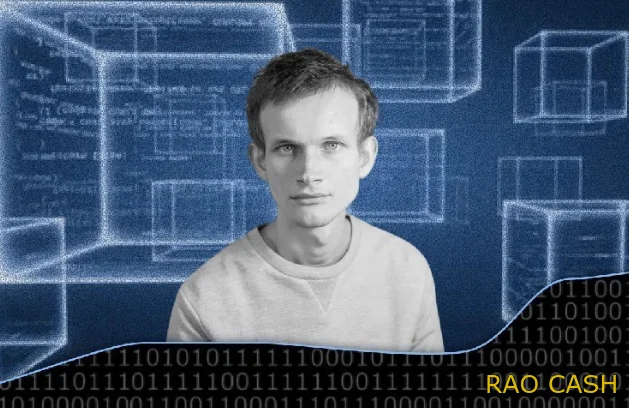
In early 2026, Ethereum co-founder Vitalik Buterin issued a landmark manifesto regarding the future of personal data. He believes that this year will be a historic "point of return" for digital control to revert to the hands of ordinary users. Buterin is confident that the era when giant centralized platforms held absolute control over people's information is coming to an end, giving way to an era of computational sovereignty.
What is computational sovereignty?
By this term, Buterin means the complete restoration of human control over their data, communications, and everyday work tools. He emphasized that over the past decades, users have quietly transferred ownership of their digital lives to intermediaries.
"We need to start from the basics—with personal devices and core software," explained the Ethereum creator in a post on the social network X. He sees 2026 as a time of mass adoption of technologies that prevent corporations from spying on the actions of device owners.
Personal Experience: Life Without Google and Corporate Control
Vitalik Buterin decided to go beyond theory and demonstrated his own path to digital independence, which he began actively implementing back in 2025. His strategy includes a complete rejection of services focused on collecting and analyzing user activity.
Key Changes in Buterin's Digital Environment:
1. Document Management: Transition to the Fileverse platform. This is a decentralized, open-source platform that replaces traditional office suites. It allows you to work on projects without sharing file contents with third parties.
2. Navigation and Mail: Instead of Google Maps, Buterin now uses OpenStreetMap, and his traditional Gmail has been completely replaced with Proton Mail, which provides end-to-end encryption of emails.
3. Social networks: Preference is given to decentralized social protocols that are protected from censorship and commercial manipulation of algorithms.
Criticism of messaging apps: Why is Signal better than Telegram?
Buterin paid special attention to communication tools in his analysis. He officially designated Signal as his primary messaging app. He cited the platform's main advantage as the use of end-to-end encryption (E2EE) by default and, more importantly, the collection of minimal user metadata.
At the same time, Buterin expressed skepticism about Telegram's architecture. He recalled that in Pavel Durov's popular messaging app, end-to-end encryption is only available in special "secret chats." Main communications and metadata are stored on the company's servers, making such a system potentially vulnerable to government pressure or hacker attacks in 2026.
The Future of Digital Freedom
Vitalik Buterin's prediction for 2026 is optimistic for those who value privacy. He believes that "secure web" tools have become user-friendly enough to be used not only by crypto-anarchists but also by the general public. Reclaiming control over data is not just a trend, but a necessary stage in the evolution of the internet, where intermediaries will no longer be able to dictate the terms of access to personal information.
Rao Cash Analytical Expertise: Event Context
The latest data presented in Vitalik Buterin: 2026 will be the year of the return of "digital sovereignty" clearly reflects the ongoing shifts in the balance of power within the global cryptocurrency market. The Rao Cash information portal monitors these market triggers 24/7, delivering high-quality crypto news, real-time on-chain statistics, and expert blockchain industry insights to our audience. We assist readers in promptly identifying long-term trends while filtering out speculative noise and market manipulation.
Analyzing the event requires a comprehensive approach, including liquidity assessment, exchange trading volume tracking, and smart contract security audits. A vital element of our internal ecosystem is the utility RAO token—a digital asset integrated into our content infrastructure that unlocks access to professional data processing tools. By conducting granular technical analysis, our team helps investors gain a deeper understanding of institutional capital flows across the DeFi and Real World Asset (RWA) tokenization sectors.
By exploring the analytical breakdown on our multi-language platform, you gain access to verified, real-time insights. Our expert editorial group prioritizes objectivity and factual accuracy, establishing a trustworthy information foundation for making informed decisions in a rapidly evolving Web3 economy.