de
de zh
zh fr
fr es
es tr
tr pt
pt nl
nl ru
ru uk
uk hi
hi
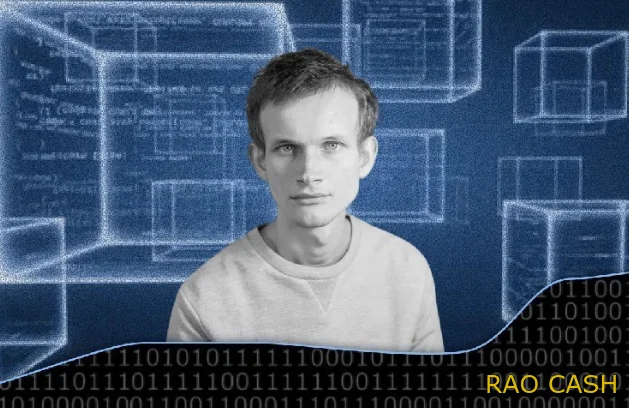
The co-founder of the second largest cryptocurrency by capitalization, Vitalik Buterin, began 2026 with an important policy statement. In his traditional New Year's address, he reminded the community of Ethereum's fundamental mission - to become a global, independent infrastructure for a free Internet. According to the developer, the modern digital world is sinking deeper into the dictatorship of subscriptions and centralized control, and only true decentralization can resist this.
“Test of care” and independence from corporations
Buterin called the main criterion for the viability of any decentralized application (dApp) the ability of the project to pass the so-called “care test.” This means that the application should function smoothly even if its original creators stop supporting the project completely.
Buterin highlighted the key threats to application freedom:
Censorship and intermediaries: dApps should not be subject to the decisions of third parties or regulators.
Infrastructure failures: Applications are required to remain operational when global services (for example, Cloudflare) go down or large hosting providers go bankrupt.
Corporate control: Blockchain solutions should be an alternative to closed ecosystems that operate on a paid subscription model.
Lessons from 2025: Technological breakthrough of Ethereum
Vitalik Buterin noted that the foundation for the “world computer” has already been laid thanks to the successful updates of the past year. In 2025, the network went through two critical phases of transformation:
Pectra update (May 2025): It radically improved the user experience through account abstraction. Now working with crypto wallets has become as easy as using email. In addition, the throughput for data (“blobs”) has increased and staking limits have increased.
Fusaka update (December 2025): The introduction of PeerDAS technology solved the scalability problem. The network has learned to process huge volumes of data without increasing the load on ordinary nodes (nodes), which is critical for maintaining the availability of the blockchain.
Course on simplification: Less code - more freedom
An interesting twist in Buterin’s strategy was his call for a radical simplification of the protocol. He is convinced that for Ethereum to remain truly decentralized, its program code should not be overly complex.
“It is necessary to remove cumbersome and unnecessary functions from the ecosystem. The simpler the protocol, the easier it is for users to run their own nodes and check the state of the network on their own, without relying on large providers,” Buterin emphasized.
The future is at the user level
For Buterin, decentralization is not just about lines of code, but also about convenience for people. In 2026, the focus of developers should shift to creating products that will simultaneously:
Scalable (fast and cheap);
Convenient (intuitive for the masses);
Transparent (completely autonomous at the smart contract level).
In conclusion
Vitalik Buterin once again confirmed that Ethereum is not just a financial asset, but an ideological project. In a world where digital boundaries are becoming ever tighter, the concept of a “world computer” remains the best chance to preserve an open and fair Internet for every user. 2026 should be the time when scaling technologies finally meet true application independence.
Rao Cash Analytical Expertise: Event Context
The latest data presented in Vitalik Buterin presented the Ethereum decentralization manifesto for 2026 clearly reflects the ongoing shifts in the balance of power within the global cryptocurrency market. The Rao Cash information portal monitors these market triggers 24/7, delivering high-quality crypto news, real-time on-chain statistics, and expert blockchain industry insights to our audience. We assist readers in promptly identifying long-term trends while filtering out speculative noise and market manipulation.
Analyzing the event requires a comprehensive approach, including liquidity assessment, exchange trading volume tracking, and smart contract security audits. A vital element of our internal ecosystem is the utility RAO token—a digital asset integrated into our content infrastructure that unlocks access to professional data processing tools. By conducting granular technical analysis, our team helps investors gain a deeper understanding of institutional capital flows across the DeFi and Real World Asset (RWA) tokenization sectors.
By exploring the analytical breakdown on our multi-language platform, you gain access to verified, real-time insights. Our expert editorial group prioritizes objectivity and factual accuracy, establishing a trustworthy information foundation for making informed decisions in a rapidly evolving Web3 economy.