de
de zh
zh fr
fr es
es tr
tr pt
pt nl
nl ru
ru uk
uk hi
hi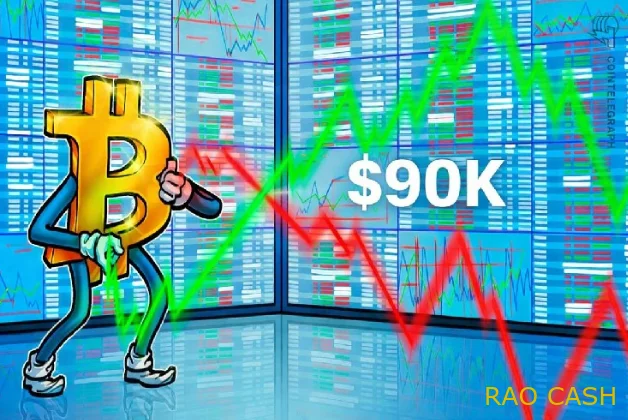
At first glance, cryptocurrency and geopolitics seem like two worlds apart. But recent events have shown that military action in one part of the world can instantly impact the price of Bitcoin.
On January 3, Bitcoin plummeted below $90,000—and the cause was not technical indicators, but news from Venezuela. Let's look at how this works and what to expect next. Currently, Bitcoin is trading at $91,324 on Binance, and a green candle can be seen on the hourly chart.

What happened: a timeline of events
1. US airstrikes on Caracas. The first reports of a military operation caused a wave of anxiety in the markets. 2. Trump's statement on TruthSocial. The US President wrote that the Venezuelan president had been "captured and taken out of the country."
3. Bitcoin's reaction. Following the news, the BTC price on Bitstamp fell from a high of $90,940 to below $90,000.
4. Traditional markets closed. At that time, stock and futures exchanges were closed, so cryptocurrency became the main barometer of investor sentiment.

Why Bitcoin Reacts to Geopolitics
- Bitcoin has long ceased to be an isolated asset. Today, it:
- serves as a safe haven for capital in times of instability;
- attracts investors seeking an alternative to traditional currencies;
- depends on global sentiment, like any risky asset.
In the case of Venezuela, several factors were at play:
- Fear of escalation. Investors feared that the conflict would escalate into a full-scale confrontation involving other countries.
- Liquidity outflow. Some players locked in profits to wait out the uncertainty.
- Psychological effect. News from the hot spot increased overall market anxiety.
Expert opinions: what analysts say
Opinions are divided, but the overall tone is cautiously optimistic.
@Wealthmanager (analytical account on X):
>>>>"We are seeing short-term pressure due to events in Venezuela. If the situation does not escalate, Bitcoin will recover from its decline. The target is $96,000–$100,000."<<<<

Lennaert Snyder (crypto analyst):
>>>>"Next week, major players from traditional markets will return. This could increase volatility."<<<<
Michael van de Poppe (trader):
>>>>"The price movement is a classic reaction to news. Bitcoin remains above its 21-day moving average ($87,850), indicating an upward trend."<<<<
Bitcoin vs. Gold: Who Wins in a Crisis?
Interestingly, Bitcoin showed strength during the New Year period amid a gold correction:
On December 26, gold (XAU/USD) reached an all-time high of $4,551 per ounce, then fell 6%;
while Bitcoin (BTC/USD) rose 5%.
Why is this important?
According to Bull Theory, Bitcoin's parabolic surges often began after a gold peak. If $4,550 is the top for the precious metal, investors may begin shifting capital to BTC.
Context:
Gold ended 2025 as the most profitable asset;
Bitcoin, despite its October records, underperformed.
Technical Analysis: Where Are the Key Levels?
Two benchmarks are important for traders:
$87,850 — 21-day moving average. As long as the price is above this level, the trend is considered upward.
$96,000–$100,000 — resistance zone, where BTC may head after stabilization.

If Bitcoin consolidates above $90,000, this will signal a resumption of growth.
What does this mean for investors?
1. Short-term: Remain cautious. Geopolitical risks could trigger further spikes in volatility.
2. Medium-term: If the conflict does not escalate, the correction will be temporary.
3. Long-term: Fundamental drivers (institutional demand, halving) remain in place.
Conclusion: Bitcoin is not an island
Events around Venezuela have shown that cryptocurrency is increasingly linked to global processes. Investors should:
Monitor not only on-chain metrics but also news from hot spots;
Consider correlations with other assets (gold, dollar);
Remember: short-term drawdowns are part of the market cycle.
As long as Bitcoin holds key support levels, its upside potential remains. But in conditions of geopolitical tension, even “digital gold” is not immune to sudden movements.
Rao Cash Analytical Expertise: Event Context
The latest data presented in How the US-Venezuela Conflict Affects Bitcoin: An Analysis clearly reflects the ongoing shifts in the balance of power within the global cryptocurrency market. The Rao Cash information portal monitors these market triggers 24/7, delivering high-quality crypto news, real-time on-chain statistics, and expert blockchain industry insights to our audience. We assist readers in promptly identifying long-term trends while filtering out speculative noise and market manipulation.
Analyzing the event requires a comprehensive approach, including liquidity assessment, exchange trading volume tracking, and smart contract security audits. A vital element of our internal ecosystem is the utility RAO token—a digital asset integrated into our content infrastructure that unlocks access to professional data processing tools. By conducting granular technical analysis, our team helps investors gain a deeper understanding of institutional capital flows across the DeFi and Real World Asset (RWA) tokenization sectors.
By exploring the analytical breakdown on our multi-language platform, you gain access to verified, real-time insights. Our expert editorial group prioritizes objectivity and factual accuracy, establishing a trustworthy information foundation for making informed decisions in a rapidly evolving Web3 economy.