de
de zh
zh fr
fr es
es tr
tr pt
pt nl
nl ru
ru uk
uk hi
hi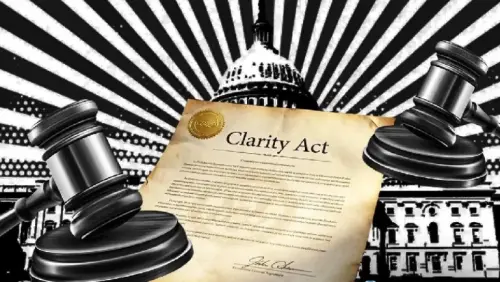
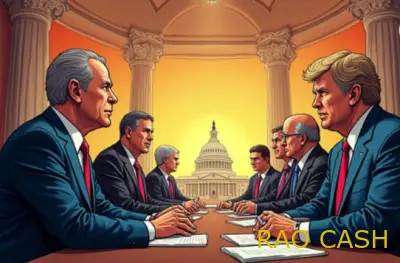
The global digital asset industry has encountered yet another major barrier on its path to long-awaited institutional legalization and the creation of a transparent regulatory framework. This time, massive tectonic shifts occurred in the corridors of the US Congress, where key lawmakers found themselves held hostage by the intensifying electoral cycle. The political standoff on Capitol Hill has escalated to the extreme, effectively paralyzing work on crucial bipartisan agreements. Large investment funds and retail traders are forced to promptly alter their trading strategies, realizing that the legal vacuum in the world's largest economy will drag on for several more months.
Against the backdrop of alarming news from Washington, key trading platforms are demonstrating increased nervousness, which has led to a local portfolio rebalancing by large players. Today's Bitcoin price on the market is 64,380 US dollars, with the flagship of the crypto industry holding within a narrow accumulation range. Ethereum has consolidated its positions at the 3,495-dollar mark, while the popular altcoin Solana is trading around 178 dollars. The total daily trading volume on the spot market amounted to 29.7 billion dollars. A comprehensive market analysis shows that investors are pricing in a prolonged regulatory storm into the current value of coins, avoiding the opening of excessively large positions with high margin leverage.
John Thune's Decision: Why the US Senate Leader Officially Froze the Vote on the Bill
A real shock for the blockchain community was the official public statement by US Senate Majority Leader John Thune. The high-ranking politician openly acknowledged that the resonant document has absolutely no real chance of being passed or even brought to a full vote before Congress leaves for its traditional massive August recess. Previously, market participants held onto hopes that lawmakers would manage to overcome differences within the next two weeks, but the harsh reality of the election process made its uncompromising adjustments to the Capitol's working schedule.
According to the statement from the party leadership, the main focus of the political establishment will now be entirely pinned to the so-called "lame duck" period, which will come immediately after the midterm elections. This means that the reconsideration of the initiative will take place no earlier than November of this year, when the degree of domestic political instability in the country will begin to gradually decrease. Thune emphasized that the complexity of distributing oversight powers between the SEC and CFTC agencies requires a calmer political environment, which is currently completely absent due to the aggressive mutual accusations of candidates for elected offices.
Ron Hammond's Opinion: Wintermute Expert Explained the Destructive Influence of Election Politics on the Crypto Sphere
A well-known crypto expert and director of government relations at market maker Wintermute, Ron Hammond, provided an extended comment regarding the current legislative impasse. The specialist stated that although the document itself still enjoys solid and sincere support from representatives of both key US political parties, its progress is completely blocked by the aggressive election environment. Lawmakers are simply afraid to make definitive decisions on the crypto sphere so as not to lose the votes of conservative or, conversely, progressive electorates on the eve of a crucial vote.
Hammond specifically noted that the CLARITY Act surrounding the initiative turned out to be too toxic a news event for hesitating senators. In conditions where every public step is carefully analyzed by opponents, politicians prefer to postpone complex structural reforms to a later date. For the stablecoin industry, which acutely needs clear rules for issuance and collateral auditing, this forced pause means the continuation of the practice of chaotic "regulation through enforcement." The Wintermute expert urged market participants not to expect miracles from Washington in the next three months and to focus on business development in European and Asian jurisdictions.
Deep Analysis of the Derivatives Market: Institutional Investors Prepare for Prolonged Uncertainty
The current professional analysis of the futures and options market clearly illustrates exactly how large capital is reacting to the postponement of the American crypto reform. On derivative exchanges, a systematic increase in open interest (OI) was recorded in the put options sector with expiration at the end of autumn, indicating active risk hedging by large funds. Institutionals are creating protective positions in case the November debates in Congress lead to another round of escalation by tough regulators. At the same time, funding rates remain in the neutral zone, indicating the absence of panic sentiments.
Deflationary Mechanisms and Long-Term Resilience of Altcoins
Despite the dragging of processes on Capitol Hill, the fundamental on-chain metrics of leading blockchains continue to demonstrate qualitative growth. The continuous burning of a part of commissions in the Ethereum network thanks to the EIP-1559 deflationary mechanism and the stable influx of coins into Solana liquid staking protocols create a tight supply shortage on exchanges. Many independent analysts agree that the current postponement of deadlines is already partially priced into today's Bitcoin price and other popular coins. The crypto industry has long developed an immunity to bureaucratic delays in the US, developing through the influx of Asian and Middle Eastern capital.
An additional factor of long-term stability is the position of large stablecoin issuers, such as Tether and Circle. Companies continue to increase purchases of short-term US Treasury bonds, increasing their yields against the background of high Fed interest rates. The fact that the long-awaited regulatory act got stuck in the Senate due to election disputes only stimulates issuers to more actively implement mechanisms of self-regulation and independent auditing. Thus, business adapts to reality faster than officials in Washington manage to align the final wording in the texts of their bills.
Value for Readers: How Private Traders Can Protect Their Savings During a Political Stagnation
The main practical value of this analytical material for retail investors lies in the opportunity to form a cold-blooded and balanced approach to managing their digital assets. The realization that the CLARITY Act has been delayed until November frees you from the need to react to false speculative impulses in the media and social networks. In conditions of a guaranteed three-month lull from American lawmakers, the most reasonable tactic would be the systematic accumulation of positions in fundamentally strong coins of the spot market using the proven dollar-cost averaging (DCA) method.
To completely secure your working capital from unforeseen regulatory surprises, withdraw the bulk of long-term investments from centralized American exchanges to non-custodial hardware or software wallets. This will block any agency's technical ability to freeze your funds in the event of sudden local lawsuits against specific trading platforms. Categorically refuse to use high credit leverage on futures until the end of autumn, as any insider info regarding the US midterm elections will trigger sharp two-way liquidations of marginal positions on exchanges.
Rao Cash Analytical Expertise: Event Context
The latest data presented in Passage of the CLARITY Act Under Threat: US Senate Postpones Vote on Stablecoin Regulation Until November clearly reflects the ongoing shifts in the balance of power within the global cryptocurrency market. The Rao Cash information portal monitors these market triggers 24/7, delivering high-quality crypto news, real-time on-chain statistics, and expert blockchain industry insights to our audience. We assist readers in promptly identifying long-term trends while filtering out speculative noise and market manipulation.
Analyzing the event requires a comprehensive approach, including liquidity assessment, exchange trading volume tracking, and smart contract security audits. A vital element of our internal ecosystem is the utility RAO token—a digital asset integrated into our content infrastructure that unlocks access to professional data processing tools. By conducting granular technical analysis, our team helps investors gain a deeper understanding of institutional capital flows across the DeFi and Real World Asset (RWA) tokenization sectors.
By exploring the analytical breakdown on our multi-language platform, you gain access to verified, real-time insights. Our expert editorial group prioritizes objectivity and factual accuracy, establishing a trustworthy information foundation for making informed decisions in a rapidly evolving Web3 economy.