de
de zh
zh fr
fr es
es tr
tr pt
pt nl
nl ru
ru uk
uk hi
hi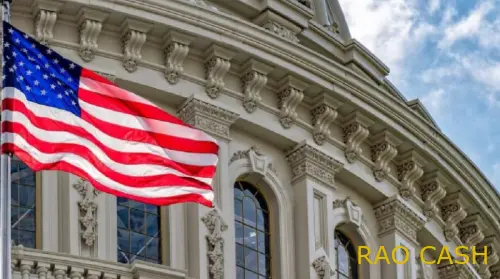
The global cryptocurrency sector has ground to a halt in anticipation of a fundamental decision that could radically alter the trajectory of institutional acceptance of digital currencies on the American continent. A political drama of unprecedented intensity is unfolding on Capitol Hill, the outcome of which will directly affect the legal status of all blockchain assets worldwide. Key members of the bipartisan negotiating group are involved in exhausting and dense discussions, trying to overcome prolonged regulatory differences. Investors are closely following every step of the lawmakers, understanding that the current window of opportunity will close irrevocably in the very near future.
Against the backdrop of protracted debates in Washington, the overall market capitalization of the cryptocurrency sector demonstrates local volatility, rapidly reacting to any insider info from Congress. Today's Bitcoin price on the market is 64,120 US dollars, while Ethereum has stabilized positions around 3,450 dollars. Traders are exercising caution, causing the daily trading volume to drop slightly to 28.4 billion dollars. A comprehensive market analysis shows that most large funds have taken a wait-and-see approach, as the approval of uniform oversight standards could instantly trigger a massive influx of liquidity from conservative investors.
Critical Two-Week Deadline: US Senate Scrambles to Approve Rules Before Recess
Lawmakers have officially entered the most decisive and intense phase of the current Congressional session, which will determine the fate of a crucial piece of legislation. According to the approved schedule of the Capitol, the elected representatives have exactly fourteen days left to fully align the final text of the document. The main deadline is the traditional massive August recess, after which the attention of politicians will be completely consumed by the upcoming presidential election. If a compromise is not reached now, the critical initiative risks getting completely lost in the abyss of campaign rhetoric and partisan disputes.
Grayscale Investments, an influential investment company managing the world's largest crypto funds, published an emergency analytical note for its clients on July 23, 2026. The head of Grayscale's research department, Zach Pandl, openly warned that the chances of successful passage of the document are melting away rapidly by the hour. In his opinion, if the US Senate does not vote on this reform within the next two weeks, the project will be postponed indefinitely, which will be a heavy blow to the expectations of the industry that was counting on the imminent appearance of clear rules of the game.
Cynthia Lummis's Revision: Updated CLARITY Act Consolidates SEC and CFTC Powers
In an attempt to save the situation and accelerate the highly complex negotiating process, Senator Cynthia Lummis, representing the Republican Party from Wyoming, made a strong political maneuver. As chair of the Senate Banking Subcommittee on Digital Assets, she officially presented a radically revised and expanded version of the legislative act on July 22. This updated CLARITY Act, for the first time in history, accumulates key compromise proposals from two prominent Senate committees simultaneously — Banking and Agriculture, creating a monolithic framework for voting.
The main architectural value of the proposed document lies in the most transparent and strict demarcation of oversight zones between the Securities and Exchange Commission (SEC) and the Commodity Futures Trading Commission (CFTC). Historically, it was the institutional conflict between these two agencies that generated prolonged legal chaos and hindered the development of American blockchain startups. The new regulation is intended to put an end once and for all to the practice of chaotic "regulation through enforcement," replacing it with clear registration standards, transparent disclosure rules, and strict mechanisms for retail client protection.
Market Analysis and Coinbase Support: Brian Armstrong Urges Immediate Vote
The largest representatives of the American cryptocurrency industry came out in a united front in support of the swift adoption of compromise legislation. The management of the leading exchange Coinbase, which has been engaged in protracted lawsuits with the SEC over recent years, openly stated that full state standards will provide the market with much greater stability than unilateral enforcement actions of individual agencies alone. Coinbase CEO Brian Armstrong made a public appeal, strongly urging lawmakers to hold a full vote in the Senate before the summer recess.
Reaction of Cryptocurrency Derivatives to the Washington Debates
The current market analysis of futures and options demonstrates a rise in hedging positions among institutional traders. On derivatives exchanges, a short-term spike in open interest (OI) of 4.2% was recorded, indicating the preparation of large players for any possible outcome of the Washington debates. If the regulatory reform fails, the market may face a short-term correction due to investor disappointment. However, in the long term, the crypto industry has already proved its resilience to political storms, continuing to develop through the influx of global capital bypassing American jurisdiction.
Experts at Mosaic Asset note that today's macroeconomic situation is aggravated by rising yields on US Treasury bonds, which additionally extracts liquidity from risky markets. Under these conditions, the adoption of clear legal frameworks for digital assets is vital for the American economy to retain capital inside the country. Industry lobbyists continue their round-the-clock work in the corridors of Congress, trying to convince doubting senators that consumer protection and financial innovation must stand above fleeting inter-party differences on the eve of elections.
Value for Readers: How Investors Can Secure Their Assets During Regulatory Storms
The main practical value of this publication for any holder of digital assets lies in the opportunity to build a smart defensive strategy for the period of increased political turbulence. Understanding that the CLARITY Act is at a critical stage allows investors not to succumb to short-term market manipulations and panic. If you are forming a long-term portfolio, remember that a possible postponement of the vote in the Senate will cause local price fluctuations, which can be effectively used to purchase fundamentally strong coins using the dollar-cost averaging (DCA) method.
To minimize the risks of sudden capital loss against the background of regulatory news from the US, transfer most of your long-term investments to non-custodial hardware or software wallets. This will completely protect your coins from possible restrictions or freezes by centralized American exchanges in the event of a new wave of aggression from the SEC. Also, closely monitor the official reports of Grayscale and Coinbase, as the actions of these giants serve as the best indicator of the real state of affairs in Washington. Avoid using high credit leverage in the next two weeks, as political news can trigger sharp two-way price impulses on exchanges.
Rao Cash Analytical Expertise: Event Context
The latest data presented in CLARITY Act Under Threat of Failure: US Senate Has Only Two Weeks for Historic Passage of Crypto Reform clearly reflects the ongoing shifts in the balance of power within the global cryptocurrency market. The Rao Cash information portal monitors these market triggers 24/7, delivering high-quality crypto news, real-time on-chain statistics, and expert blockchain industry insights to our audience. We assist readers in promptly identifying long-term trends while filtering out speculative noise and market manipulation.
Analyzing the event requires a comprehensive approach, including liquidity assessment, exchange trading volume tracking, and smart contract security audits. A vital element of our internal ecosystem is the utility RAO token—a digital asset integrated into our content infrastructure that unlocks access to professional data processing tools. By conducting granular technical analysis, our team helps investors gain a deeper understanding of institutional capital flows across the DeFi and Real World Asset (RWA) tokenization sectors.
By exploring the analytical breakdown on our multi-language platform, you gain access to verified, real-time insights. Our expert editorial group prioritizes objectivity and factual accuracy, establishing a trustworthy information foundation for making informed decisions in a rapidly evolving Web3 economy.