de
de zh
zh fr
fr es
es tr
tr pt
pt nl
nl ru
ru uk
uk hi
hi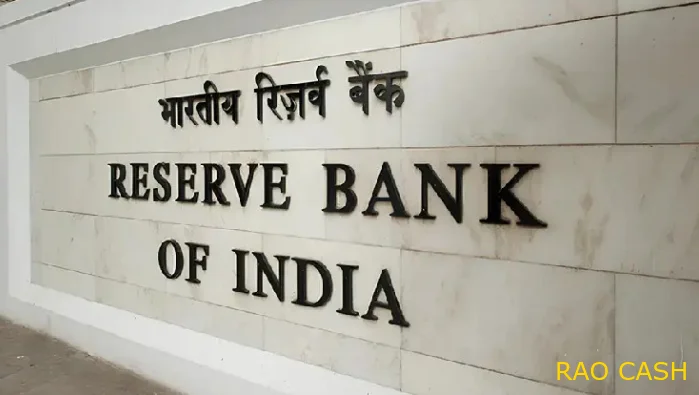
A serious confrontation is brewing in the financial world between government regulators and private crypto companies. The Reserve Bank of India (RBI) issued a strong statement, calling on the global community to reconsider its stance on stablecoins. According to the Indian regulator, these digital assets are not a step into the future, but a direct threat to the economic security of the planet.
Are Stablecoins Not Money?
In its latest Financial Stability Report 2026, the RBI emphasizes that tokens pegged to traditional currencies (such as the dollar or euro) are merely masquerading as means of payment. The central bank asserts that stablecoins do not possess the fundamental properties of real money.
Indian officials highlight three criteria that private tokens do not meet:
Uniformity (lack of a single issuance standard).
Flexibility (difficulty adapting to the state's monetary policy).
Integrity (lack of 100% guarantee of collateral).
"It is important to understand that stablecoins are issued by private fintech companies. If such an asset loses its peg to the exchange rate, investors will instantly lose their capital, and the state will be unable to protect it," the RBI warns.
Threat to Monetary Sovereignty
India is particularly concerned about so-called "currency expansion." When citizens of developing countries begin to massively use stablecoins pegged to foreign currencies, this undermines the influence of local central banks.
Effectively, the country could lose control over its own money supply, which would weaken national sovereignty. With the US already legalizing regulation of stablecoins, India sees this as a risk of global dominance by private digital dollars over the national economies of other countries.
CBDC as the only secure path
Instead of developing a private crypto market, the Reserve Bank of India proposes focusing all resources on the implementation of CBDCs – central bank digital currencies. According to the regulator, this is the only way to maintain "monetary uniformity" in the digital age.
India highlights the key advantages of government-backed digital currencies:
Minimal costs: Reduced transaction costs for the population.
Security: Direct government guarantee of the safety of funds.
Confidentiality: Controlled protection of user data.
Cross-border settlements: The ability to quickly transfer money between countries without the intermediary of Western banking systems.
India's Experience: Digital Rupee Goes Offline
While the world debates the advisability of crypto regulation, India has taken decisive action. In 2025-2026, the country will actively test a digital rupee in regions where internet access is limited or completely non-existent.
The goal of the experiment is to prove that a state-issued digital currency can be as convenient as cash, yet far more effective for international trade. India has already issued a directive allowing international settlements in digital rupees, cementing its status as a global leader in CBDC implementation.
In Conclusion
India's position is clear: the world must abandon "surrogates" in the form of private stablecoins in favor of official digital currencies. Whether Delhi will be able to convince its G20 and BRICS colleagues to follow suit remains to be seen, but the vector for strengthening state control over digital finance has been set very clearly.
Rao Cash Analytical Expertise: Event Context
The latest data presented in The Bank of India has called on all countries to abandon stablecoins clearly reflects the ongoing shifts in the balance of power within the global cryptocurrency market. The Rao Cash information portal monitors these market triggers 24/7, delivering high-quality crypto news, real-time on-chain statistics, and expert blockchain industry insights to our audience. We assist readers in promptly identifying long-term trends while filtering out speculative noise and market manipulation.
Analyzing the event requires a comprehensive approach, including liquidity assessment, exchange trading volume tracking, and smart contract security audits. A vital element of our internal ecosystem is the utility RAO token—a digital asset integrated into our content infrastructure that unlocks access to professional data processing tools. By conducting granular technical analysis, our team helps investors gain a deeper understanding of institutional capital flows across the DeFi and Real World Asset (RWA) tokenization sectors.
By exploring the analytical breakdown on our multi-language platform, you gain access to verified, real-time insights. Our expert editorial group prioritizes objectivity and factual accuracy, establishing a trustworthy information foundation for making informed decisions in a rapidly evolving Web3 economy.