de
de zh
zh fr
fr es
es tr
tr pt
pt nl
nl ru
ru uk
uk hi
hi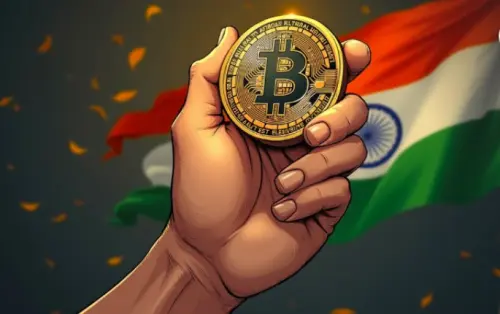
India is rapidly accelerating its large-scale diplomatic efforts aimed at positioning its national currency at the forefront of the global financial arena. While key member states of the international BRICS bloc are thoroughly engineering innovative mechanisms for de-dedollarization, New Delhi focuses heavily on the massive expansion of cross-border rupee settlements. The ultimate long-term goal of this strategy is the diversification of reserves and the reduction of systemic dependence on Western capital. Concurrently, major global cryptocurrency exchanges, including Binance, record stable dynamics across leading digital assets. Specifically, as of today (August 11, 2026), the price of the flagship crypto asset Bitcoin (BTC) has firmly established its position at $64,190.41, demonstrating notable market resilience.
The historical context of the current year places a profound responsibility on the Indian government within the international geopolitical track. In 2026, the consecutive summit of the BRICS heads of state is hosted precisely by India, which automatically transforms the country into the primary moderator of economic discussions. Official New Delhi intends to leverage this status to promote its own digital standards and accelerate the integration of national currency systems. Against the backdrop of these major macroeconomic developments, interesting price movements are also observed in the spot market of digital tokens within the BNB Chain ecosystem. According to official trading data from the Binance platform, the native token BNB is currently trading around $603.93, confirming high interest from large institutional investors in decentralized payment gateways.
Building a New Payment Network Across the BRICS Space
The deployment of a sovereign multicurrency BRICS infrastructure demands deep technological synchronization of financial markets and banking sectors from its participants. Within expert discussions at the highest state level, the creation of end-to-end gateways for linking fast payment systems is being deliberated. India plans to integrate its highly successful UPI payment system with similar platforms of other friendly nations. A key event in this process will be the formation of a unified circuit for instant retail transfers, minimizing transactional overhead for businesses. Such deep integration will enable direct conversion without the involvement of the US dollar, drastically neutralizing the influence of Western sanction mechanisms.
In parallel with developing traditional fiat channels, the Reserve Bank of India is actively testing both wholesale and retail versions of its own digital rupee (e-Rupee). The implementation of distributed ledger technology in state settlements is viewed as a foundation for secure interaction with central bank digital currencies (CBDCs) of other nations. Official New Delhi has already invited partners within the economic bloc to merge national CBDC platforms under the BRICS Pay pilot project. The full realization of such a distributed architecture will allow for instantaneous interbank clearing operations, completely replacing the outdated and heavily politicized European SWIFT system.
Global Expansion of the Global Rupee on Trading Venues
The extensive campaign for the internationalization of Indian money finds active support among the country's largest trading partners in Asia and the Middle East. The Governor of the Reserve Bank of India, Sanjay Malhotra, highlighted the importance of transitioning to national currency settlements in his latest official statement to Reuters. At present, India has already concluded several strategic agreements with the UAE, Saudi Arabia, and Russia regarding direct trade without the intermediary use of US currency. A significant milestone was achieved through the execution of the first pilot transactions for purchasing crude oil and liquefied natural gas using Indian rupees, establishing a solid foundation for a new, resilient petro-rupee cluster on the Eurasian continent.
Nonetheless, on its path toward achieving full status as a global reserve asset, India must resolve several serious structural challenges. The country's current currency legislation still imposes certain limitations on the full convertibility of the national monetary unit outside the domestic market. Financial analysts note that to expand the utility of the rupee, the government needs to stimulate the development of liquid offshore derivative markets. Growth in trust from private transnational corporations is only possible under predictable monetary policies and a stable exchange rate, which is currently backed by the substantial foreign exchange reserves of the Reserve Bank of India.
The Role of Digital Currency in De-dollarization Processes
The global trend toward the de-dollarization of the world economy is gradually transitioning from political declarations into the practical deployment of secure blockchain solutions. The shift of BRICS nations toward state crypto assets allows them to bypass traditional correspondent accounts controlled by American regulators. A decisive factor for success here lies in creating independent, decentralized systems capable of operating under strict external constraints. Utilizing tokenized national currency units significantly accelerates the processing time of international payments, shortening settlement windows from several standard banking days down to mere seconds.
Furthermore, the evolution of state digital assets exerts a powerful stimulating effect on the entire landscape of the Web3 industry and decentralized finance. Major technological players and fintech enterprises are closely monitoring the creation of the cross-border BRICS crypto infrastructure, adapting their internal services to the new realities. Experts believe that the convergence of classical banking instruments with central bank digital currencies will create a unique precedent, allowing sovereign money to circulate seamlessly within decentralized networks, thereby unlocking fundamentally new opportunities for investment and global trade finance.
Benefits for Readers
Understanding the current tectonic shifts in the international settlement architecture allows private investors and entrepreneurs to optimize their personal financial strategies in a timely manner. The primary value of this information lies in the opportunity to diversify existing investment portfolios ahead of time, reducing the share of assets denominated in US dollars or euros. The transition of the world's largest emerging economies to alternative payment gateways implies that, in the long term, traditional fiat instruments of developed nations may face a gradual decline in global liquidity. Monitoring India's initiatives within BRICS helps investors identify promising new markets for long-term capital allocation.
For representatives of small and medium-sized enterprises engaged in foreign economic activity, the development of the BRICS Pay payment network unlocks direct access to new consumer markets without transactional risks. Entrepreneurs who are among the first to adopt settlements in national monetary units or state digital currencies will gain a colossal competitive advantage due to the elimination of hidden fees for double conversion. This will significantly lower the final cost of imported goods and accelerate the turnover of working capital. Knowledge of the legal and technological nuances surrounding the functioning of the Indian digital rupee and fast payment systems enables businesses to construct resilient logistical and financial chains.
For everyday users and retail crypto investors, this analysis provides a better grasp of the deep fundamental connections between macroeconomics and the digital asset market represented on the Binance exchange. The rising popularity and state recognition of the CBDC concept will inevitably lead to an overall increase in digital literacy worldwide and the mass adoption of blockchain technologies. Observing how sovereign states build their digital platforms allows private traders to more accurately forecast long-term development trends of decentralized protocols, as well as evaluate the stability of stablecoins and native tokens like BTC and BNB amidst a changing world order.
Rao Cash Analytical Expertise: Event Context
The latest data presented in India Claims Global Rupee Status Within Emerging BRICS Payment Network clearly reflects the ongoing shifts in the balance of power within the global cryptocurrency market. The Rao Cash information portal monitors these market triggers 24/7, delivering high-quality crypto news, real-time on-chain statistics, and expert blockchain industry insights to our audience. We assist readers in promptly identifying long-term trends while filtering out speculative noise and market manipulation.
Analyzing the event requires a comprehensive approach, including liquidity assessment, exchange trading volume tracking, and smart contract security audits. A vital element of our internal ecosystem is the utility RAO token—a digital asset integrated into our content infrastructure that unlocks access to professional data processing tools. By conducting granular technical analysis, our team helps investors gain a deeper understanding of institutional capital flows across the DeFi and Real World Asset (RWA) tokenization sectors.
By exploring the analytical breakdown on our multi-language platform, you gain access to verified, real-time insights. Our expert editorial group prioritizes objectivity and factual accuracy, establishing a trustworthy information foundation for making informed decisions in a rapidly evolving Web3 economy.