de
de zh
zh fr
fr es
es tr
tr pt
pt nl
nl ru
ru uk
uk hi
hi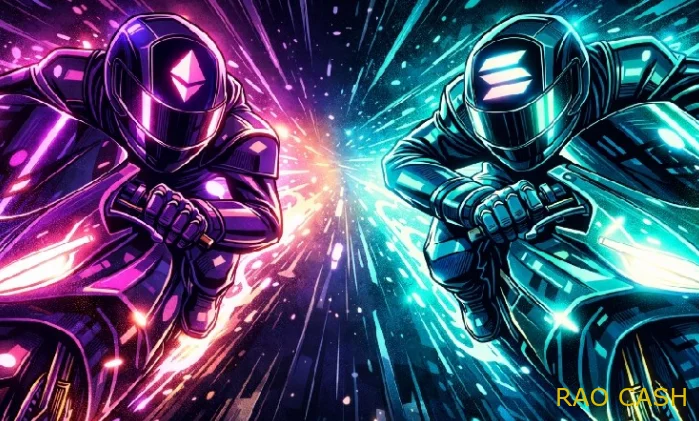
Rob Hadik, General Partner at Dragonfly venture capital firm, expressed his belief that a blockchain capable of completely dominating the real-world asset tokenization market will not emerge in the near future. He argued that Ethereum and Solana will develop in parallel, without displacing each other, as the scale of the market exceeds the capabilities of any single blockchain.
Searching for a Single Winner
Hadik noted that the market is persistently searching for a single winner, but such a scenario is unlikely in the blockchain industry. Growing interest in tokenization and increased activity in the on-chain environment are creating demand that cannot be met by a single blockchain. If a significant portion of assets is tokenized, the ecosystem will require multiple large networks to meet this demand.
Different Functions of Ethereum and Solana
Currently, Ethereum and Solana perform different functions in the ecosystem. Ethereum remains the primary platform for stablecoin deployment, making it a significant player in the tokenization space. Meanwhile, Solana, thanks to its high scalability and transaction processing speed, remains a popular solution for everyday payments.
Asset Volumes
The differences between Ethereum and Solana are also evident in the volumes of assets stored. According to public data, the total value of financial instruments on Ethereum is estimated at $184 billion, while Solana accounts for only $16 billion. Despite this significant gap, Hadik emphasizes that this should not be interpreted as a clear dominance of one network over the other.
The Future of the Blockchain Ecosystem
The expert believes that in the current environment, no single blockchain will be able to scale to a universal platform for all use cases. Instead, the market will develop as a distributed ecosystem, with each blockchain occupying its own specific niche. Over time, new networks will join them, creating a more diverse and flexible infrastructure for asset tokenization.
In Conclusion
Thus, Solana and Ethereum, despite their differences, will coexist and develop within a single ecosystem, providing users with a variety of solutions for tokenization and asset management.
Rao Cash Analytical Expertise: Event Context
The latest data presented in Solana and Ethereum will coexist in the tokenization race clearly reflects the ongoing shifts in the balance of power within the global cryptocurrency market. The Rao Cash information portal monitors these market triggers 24/7, delivering high-quality crypto news, real-time on-chain statistics, and expert blockchain industry insights to our audience. We assist readers in promptly identifying long-term trends while filtering out speculative noise and market manipulation.
Analyzing the event requires a comprehensive approach, including liquidity assessment, exchange trading volume tracking, and smart contract security audits. A vital element of our internal ecosystem is the utility RAO token—a digital asset integrated into our content infrastructure that unlocks access to professional data processing tools. By conducting granular technical analysis, our team helps investors gain a deeper understanding of institutional capital flows across the DeFi and Real World Asset (RWA) tokenization sectors.
By exploring the analytical breakdown on our multi-language platform, you gain access to verified, real-time insights. Our expert editorial group prioritizes objectivity and factual accuracy, establishing a trustworthy information foundation for making informed decisions in a rapidly evolving Web3 economy.