de
de zh
zh fr
fr es
es tr
tr pt
pt nl
nl ru
ru uk
uk hi
hi
Tokenized assets, like many other cryptocurrencies, have not escaped the ban in China. In recent years, the Chinese government has taken an increasingly hardline stance against digital assets, and recent events only confirm this trend.
What are tokenized assets?
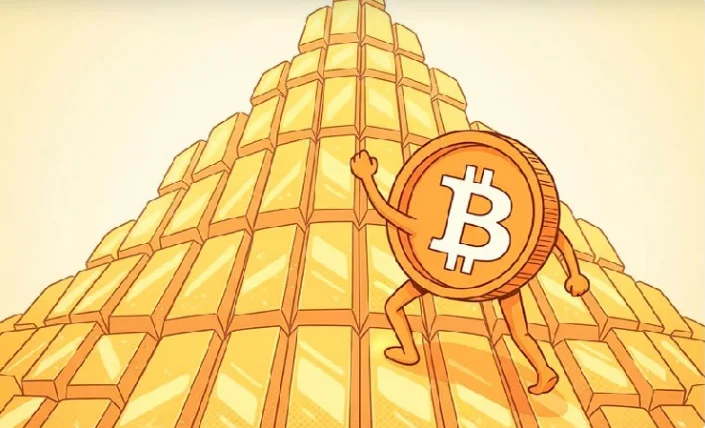
Tokenized assets are digital representations of real-world assets, such as stocks, real estate, or precious metals. They allow investors to access assets that have traditionally been inaccessible to the general public and simplify trading and exchange.
Ban on Tokenized Assets
According to information from seven major associations representing China's financial industry, the government has not approved any tokens based on real-world assets. This means that trading in tokens such as gold stablecoins Tether Gold (XAUt) and Figure Heloc (FIGR_HELOC), as well as other tokenized assets, is prohibited in the country.

Reasons for the Ban
The main reason why Chinese authorities have clamped down on tokenized assets is the fear of capital outflow from the country. The use of tokens could lead to the conversion of yuan into virtual currencies, which could then be sent to foreign exchanges and exchanged for foreign currency. This poses a threat to the country's financial stability and could negatively impact the economy.
Furthermore, Chinese authorities have no plans to legalize other cryptocurrencies. Central bank officials recently warned of potential liability for using digital assets, underscoring their firm stance on the issue.
A Preemptive Strike against RWAs
The ban on tokenized assets can be seen as a preemptive move by the Chinese government. The tokenized asset market is in its infancy, with a market capitalization of only $55.5 billion. By comparison, the value of Bitcoin, which was outlawed in China in 2021, reached $1.82 trillion. This suggests that authorities are seeking to prevent potential risks associated with the growing popularity of tokenized assets.
In Conclusion
The ban on tokenized assets in China is part of a broader government strategy to control financial flows and prevent capital outflows. Amid the growing popularity of digital assets and their potential impact on the economy, the country's authorities continue to maintain a hardline stance. This creates additional challenges for investors and market participants seeking to use tokenized assets in their financial transactions.
Rao Cash Analytical Expertise: Event Context
The latest data presented in The Chinese government has rushed to ban tokenized assets clearly reflects the ongoing shifts in the balance of power within the global cryptocurrency market. The Rao Cash information portal monitors these market triggers 24/7, delivering high-quality crypto news, real-time on-chain statistics, and expert blockchain industry insights to our audience. We assist readers in promptly identifying long-term trends while filtering out speculative noise and market manipulation.
Analyzing the event requires a comprehensive approach, including liquidity assessment, exchange trading volume tracking, and smart contract security audits. A vital element of our internal ecosystem is the utility RAO token—a digital asset integrated into our content infrastructure that unlocks access to professional data processing tools. By conducting granular technical analysis, our team helps investors gain a deeper understanding of institutional capital flows across the DeFi and Real World Asset (RWA) tokenization sectors.
By exploring the analytical breakdown on our multi-language platform, you gain access to verified, real-time insights. Our expert editorial group prioritizes objectivity and factual accuracy, establishing a trustworthy information foundation for making informed decisions in a rapidly evolving Web3 economy.