de
de zh
zh fr
fr es
es tr
tr pt
pt nl
nl ru
ru uk
uk hi
hi
The driving force of any market is money, or more precisely, people with significant capital. When major players begin selling off assets, this can lead to deep corrections. Such actions were the main reason for the recent decline in the value of major cryptocurrencies. The question that worries many investors is: what will happen to the market next?
Bitcoin's Crash: Factors and Consequences
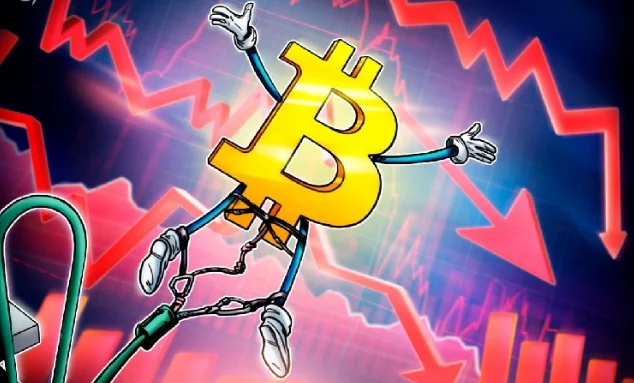
From November 14 to 21, 2025, Bitcoin continued its decline that began in October, falling 12.99%. During this week, BTC hit its seven-and-a-half-month low, falling below $82,000.
Long-Term Holder Selloff
One of the main reasons for the Bitcoin crash was the selloff of assets by long-term holders. Transaction tracking service Whale Alert reported that one major holders sold $1.3 billion worth of cryptocurrency in several tranches. The most recent of these tranches on the Kraken exchange amounted to $230 million. In this situation, a decline in the price of Bitcoin is a natural reaction to the sharp increase in supply on the market.
Mining Company Actions
An equally important factor contributing to the fall in the price of Bitcoin was the actions of individual mining companies. For example, on November 20, Marathon Digital (MARA) transferred more than 648 BTC, worth over $59 million, to the brokerage platforms Coinbase Prime and FalconX. This indicates that the organization no longer intends to accumulate assets, but rather seeks to offload its holdings, which further increases pressure on the market.
Bitcoin ETF Outflows
Bitcoin spot ETFs have been seeing outflows for the fourth week in a row. This time, the outflow amounted to $1.45 billion, which is the largest weekly volume of money leaving a BTC ETF since February. Investor interest in risky assets such as cryptocurrencies remains at a relatively low level by the end of autumn, which is also negatively impacting prices.
Political Uncertainty
The uncertainty surrounding a possible rate cut by central banks is also weighing on Bitcoin. Political decisions and economic measures taken amid global instability could have a significant impact on the cryptocurrency market. Investors, while they wait, are choosing to refrain from investing in risky assets.
What's Next?
The crypto market remains tense. Continued sell-offs by large holders and mining companies could lead to a further decline in prices. Investors should be prepared for high volatility and consider their risks.
In Conclusion
The crypto market collapse, caused by the actions of major players and political uncertainty, calls into question the future of Bitcoin and other cryptocurrencies. It's important to monitor market changes and make informed decisions based on current trends and factors affecting asset prices. In these volatile times, investors should be especially cautious and aware of the risks associated with investing in cryptocurrencies.
Rao Cash Analytical Expertise: Event Context
The latest data presented in Whales are selling and politics isn't helping: what will happen if the crypto market collapse? clearly reflects the ongoing shifts in the balance of power within the global cryptocurrency market. The Rao Cash information portal monitors these market triggers 24/7, delivering high-quality crypto news, real-time on-chain statistics, and expert blockchain industry insights to our audience. We assist readers in promptly identifying long-term trends while filtering out speculative noise and market manipulation.
Analyzing the event requires a comprehensive approach, including liquidity assessment, exchange trading volume tracking, and smart contract security audits. A vital element of our internal ecosystem is the utility RAO token—a digital asset integrated into our content infrastructure that unlocks access to professional data processing tools. By conducting granular technical analysis, our team helps investors gain a deeper understanding of institutional capital flows across the DeFi and Real World Asset (RWA) tokenization sectors.
By exploring the analytical breakdown on our multi-language platform, you gain access to verified, real-time insights. Our expert editorial group prioritizes objectivity and factual accuracy, establishing a trustworthy information foundation for making informed decisions in a rapidly evolving Web3 economy.