de
de zh
zh fr
fr es
es tr
tr pt
pt nl
nl ru
ru uk
uk hi
hi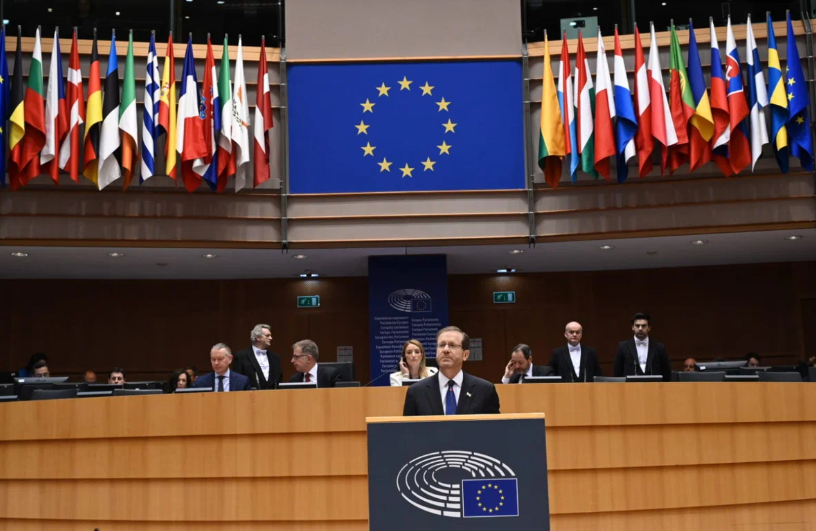
The major exchanges say they support MiCA. But who will protect user privacy sacrificed on the altar of regulation?
Predictably, the first reaction to MiCA came from major industry players - particularly the world's largest exchanges. The exchanges have already said that they are very enthusiastic about the new set of rules that will help bring clarity to the industry.
Nonetheless, there is much to talk аbout: the MiCA certainly favors more structured brokers, who will certainly not be deterred by a significant increase in compliance and user registration procedures.
It's a complex situation on several fronts, and needs to be analyzed in more depth to understand how and where the market will move.
The first comments are already coming in: Binance and Coinbase are happy with MiCA
The first comments came after the approval of MiCA, a set of rules that will regulate the entire cryptocurrency and exchange sector in Europe, as well as the management of certain types of projects. It is an organic regulatory complex that is also accompanied by laws that encroach on user privacy, but which at least the big players in the sector seem to like.
It is a message that Changpeng Zhao confides to his official Twitter account, and which openly speaks to the success of a core of rules that will change the cards on the table, but which will offer, at least according to Binance's CEO, a clear regime within which exchanges can move.
Coinbase acts in the same spirit, albeit in a less articulate manner.
Discounted enthusiasm for the biggest, but not the smallest
A restrictive set of rules that increases the burden of compliance is more likely to be embraced by the biggest players in the sector, who have the structure, money and organization to handle the new burden, than by smaller players, who will instead perceive certain costs as a threat to their business.
There's little to discuss at this point that the new rules will cut into the capacity of many players who can't boast the volume of Coinbase and Binance. And declarations of enthusiasm from the world's two largest exchanges should probably also be seen in this sense.
That said, we continue to question whether regulations can protect (but from whom?) users in Europe. Users who - thanks to the Trever Rule law passed in parallel - will be exposed to card payments if they use self-hosted wallets, in other words, wallets they own.
Let's hope that comments on this will also come from the big players in this sector, who certainly have a stronger voice than individual users.
Rao Cash Analytical Expertise: Event Context
The latest data presented in MiCA: major crypto-exchanges are in favor clearly reflects the ongoing shifts in the balance of power within the global cryptocurrency market. The Rao Cash information portal monitors these market triggers 24/7, delivering high-quality crypto news, real-time on-chain statistics, and expert blockchain industry insights to our audience. We assist readers in promptly identifying long-term trends while filtering out speculative noise and market manipulation.
Analyzing the event requires a comprehensive approach, including liquidity assessment, exchange trading volume tracking, and smart contract security audits. A vital element of our internal ecosystem is the utility RAO token—a digital asset integrated into our content infrastructure that unlocks access to professional data processing tools. By conducting granular technical analysis, our team helps investors gain a deeper understanding of institutional capital flows across the DeFi and Real World Asset (RWA) tokenization sectors.
By exploring the analytical breakdown on our multi-language platform, you gain access to verified, real-time insights. Our expert editorial group prioritizes objectivity and factual accuracy, establishing a trustworthy information foundation for making informed decisions in a rapidly evolving Web3 economy.