de
de zh
zh fr
fr es
es tr
tr pt
pt nl
nl ru
ru uk
uk hi
hi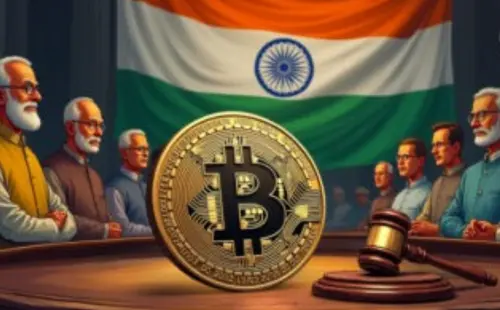
In India millions of cryptocurrency users are actively forming an alternative economic reality, turning the South Asian region into one of the most dynamically developing sectors of decentralized finance in the world. According to authoritative analytical reports and statistical data from specialized platforms, the local population demonstrates record rates of digital asset adaptation, using them for long-term investments, retail trade, and cross-border transfers. The scale of involvement of ordinary citizens in the blockchain industry amazes experts, who record a constant influx of fresh retail capital.
However, against the backdrop of such a rapid and massive fascination with digital gold on the part of the private sector, a logical and highly paradoxical geopolitical question arises. Today, according to official verified information from the BitcoinTreasuries portal, state structures and the treasury of this country do not have absolutely a single cryptographic token on their balance sheet. Such a striking and deep contrast between the colossal user activity of the population and the complete, fundamental absence of sovereign assets causes serious discussions in the expert community.
Many leading economists and international financial analysts are trying to understand in detail the reasons for such a conservative government approach to the distribution of reserve funds. In conditions where individual progressive states are already beginning to systematically form their strategic cryptocurrency reserves, New Delhi continues to maintain a distinctly distanced and wait-and-see position. Such a history page inevitably generates many arguments about whether the state is losing historical economic opportunities or, on the contrary, competently protecting the budget from unpredictable market risks.
Cryptocurrencies in India and the tough regulatory stance of the national government
Official representatives of the Reserve Bank and relevant ministries have repeatedly emphasized that the massive fascination of citizens with new technologies and the possession of sovereign assets by the state are absolutely parallel processes. While ordinary local traders use blockchain tools for speculation, state institutions are obliged to assess global macroeconomic consequences, including total liquidity management. Adopting a highly volatile instrument on the balance sheet of the central bank requires the creation of a complex legal and technical infrastructure.
The most important restraining factors for officials remain high price volatility, unpredictable tax risks, and difficulties with ensuring the security of confiscated funds. Instead of direct token purchases, the authorities focused on strict fiscal control, introducing high taxes on cryptocurrency income and transactions to minimize gray schemes. Such regulatory barriers are designed to cool the excessive ardor of retail investors and prevent an uncontrolled outflow of national capital to foreign jurisdictions.
If you pay attention to international financial venues, the market demonstrates moderate consolidation in real time before important news. At the current moment, the price at the current moment for the first cryptocurrency Bitcoin on Binance is fixed at the level of $78,642, which reflects a temporary lull. Local investors, forming their short-term and long-term strategies, are forced to constantly take into account the tough stance of the authorities and independently conduct regular deep monitoring of the movement of large whale capitals.
"The Indian retail cryptocurrency market is an unmanageable locomotive that the government is trying to restrain with draconian taxes. The complete absence of official bitcoins on the treasury's balance sheet is a conscious political gesture demonstrating a reluctance to legitimize the sector at the state level. The authorities are afraid of undermining the position of the rupee," note leading macroeconomists on the X social network (formerly Twitter).
Features of forming sovereign funds and real state bitcoin reserves
Global experience clearly shows that those states that are officially listed today as major holders of digital gold did not always acquire it directly with budget money. In most known cases, including the US and European countries, government wallets were replenished through successful law enforcement operations against cybercrime. Large-scale confiscations of illegal platforms and darknet marketplaces automatically turned ministries of finance into the largest long-term investors.
In this regard, the absence of obvious reserves in New Delhi may indicate a lack of well-established mechanisms for judicial seizure and subsequent storage of digital material evidence. Current legislation simply does not provide clear procedures for holding decentralized tokens in state accounts for a long time. Because of this, any coins seized during investigations often freeze at the stage of judicial proceedings, without falling into the official statistics of treasury reserves.
To understand the general processes of capital transformation, it is useful to study related sectors that directly affect the distribution of liquidity in developing Asian regions. In conditions of constant regulatory changes, a professional digital finance analysis becomes the main tool for medium-term planning. While the state chooses conservative tactics, private conglomerates and technological startups continue to actively implement blockchain solutions into everyday business processes.
Potential risks of creating a strategic stockpile of cryptocurrencies
The main argument against purchasing decentralized assets with public funds is colossal volatility, capable of destabilizing budget indicators of any developing country. A drop in the asset's rate by 30-40% within a few weeks can cause serious damage to sovereign funds and provoke harsh criticism from the opposition and the population. In conditions where public finances require maximum predictability, placing reserves in high-risk tokens is considered an unacceptable step.
In addition, the creation of an official reserve would require the government of India to radically review all its current monetary policy and recognize bitcoin as a legal financial instrument. This would enter into a sharp contradiction with the Reserve Bank's plans to launch and scale its own digital rupee (CBDC). The Central Bank seeks to maintain a complete monopoly on emission and control of the money supply, preventing the emergence of strong independent competitors.
"India is choosing the path of creating its own central bank digital currency, so buying bitcoin for reserves would look like a discredit to the national CBDC program. The government will not invest in decentralized networks while trying to build a fully controlled state digital ecosystem of settlements," analysts share their opinion in profile Telegram channels.
Benefit for readers and practical takeaways for crypto investors
This analytical material provides readers with a deep understanding of the complex relationship between massive retail adoption of technology and conservative state macroeconomic policy. Realizing the reasons why major developing economies refuse to create sovereign crypto reserves helps investors to evaluate global risks more soberly. This knowledge protects against unfounded illusions regarding the imminent and widespread recognition of decentralized assets at the level of central banks.
The practical value of the article lies in providing clear guidelines based on verified data from Binance and BitcoinTreasuries, which can be used for medium-term portfolio planning. Understanding the regulatory climate in the largest regions of the world allows for more accurate forecasting of periods of tightening control and possible fiscal pressure on the industry. We strongly recommend that readers take into account the conservative factor of state regulators and diversify their investments in the blockchain industry.
Rao Cash Analytical Expertise: Event Context
The latest data presented in In India millions of cryptocurrency users amid the total absence of official bitcoin reserves held by the state clearly reflects the ongoing shifts in the balance of power within the global cryptocurrency market. The Rao Cash information portal monitors these market triggers 24/7, delivering high-quality crypto news, real-time on-chain statistics, and expert blockchain industry insights to our audience. We assist readers in promptly identifying long-term trends while filtering out speculative noise and market manipulation.
Analyzing the event requires a comprehensive approach, including liquidity assessment, exchange trading volume tracking, and smart contract security audits. A vital element of our internal ecosystem is the utility RAO token—a digital asset integrated into our content infrastructure that unlocks access to professional data processing tools. By conducting granular technical analysis, our team helps investors gain a deeper understanding of institutional capital flows across the DeFi and Real World Asset (RWA) tokenization sectors.
By exploring the analytical breakdown on our multi-language platform, you gain access to verified, real-time insights. Our expert editorial group prioritizes objectivity and factual accuracy, establishing a trustworthy information foundation for making informed decisions in a rapidly evolving Web3 economy.