de
de zh
zh fr
fr es
es tr
tr pt
pt nl
nl ru
ru uk
uk hi
hi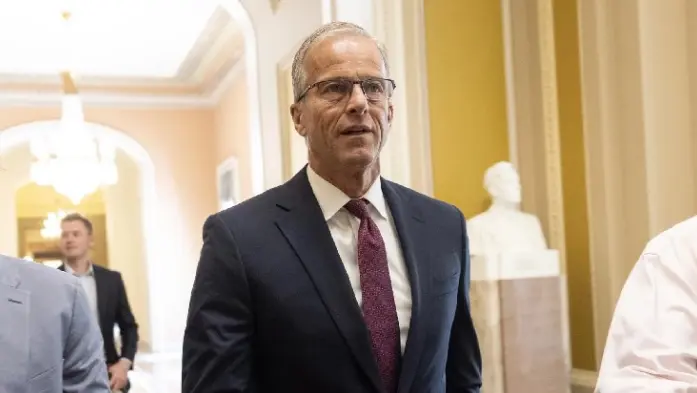
Attempts by the American blockchain sector to achieve swift legal regulation have encountered an insurmountable bureaucratic barrier on Capitol Hill. The upper house of Congress is officially concluding its current working session without putting the long-awaited Cryptocurrency Transparency Act to a final vote. For a long time, digital industry leaders relied on a compromise between lawmakers, but deep interparty disagreements forced the leadership to postpone the debates. Now, key market representatives tie their hopes exclusively to the launch of the autumn session, when senators will return to the full legislative process in Washington after a prolonged summer break.
The key event was the official confirmation that the review of the crypto market structure has been postponed until at least the middle of next month. According to insider sources, major institutional funds closely followed the progress of the discussion. Supporters of regulatory clarity hoped that the Senate would extend its working days to adopt the Digital Asset Market Transparency Act, but this did not happen. The political consensus was shattered due to radically opposing views of Democrats and Republicans on the methods of controlling decentralized protocols, leading to a complete freeze of current progress in this area.
Reasons for Postponing the Clarity Bill Vote and the Congressional Agenda
Another round of behind-the-scenes negotiations in Washington showed that the current economic priorities of the US authorities lie in a completely different plane. Instead of integrating comprehensive rules for the crypto industry, lawmakers focused on the short-term maintenance of the government apparatus's viability. The key event of Friday morning before leaving for recess will be the approval of a resolution to extend funding for the federal government. This forced step is aimed at preventing a technical shutdown of the executive branch, which could paralyze the country directly ahead of the upcoming midterm Congressional elections.
In addition, senators will have to consider a package of harsh new sanctions against the Russian Federation, developed by influential parliamentarian Lindsey Graham, as well as approve a list of important nominations for judicial and administrative posts. The authoritative American publication Politico, citing its own sources, confirmed that the first vote on the sensational Clarity bill is completely excluded from the current plans of the Senate. The political elite preferred to postpone high-tech financial reforms, concentrating resources on traditional geopolitical challenges and internal budget disputes.
Senate Return Schedule and New Timelines for Cryptocurrency Reforms
The official resumption of work for American lawmakers in Washington is scheduled for September 14, 2026. From this moment on, representatives of both parties will have exactly three weeks at their disposal before the start of the next electoral cycle to try to move the process forward. Professional lobbyists from Washington note that the Cryptocurrency Transparency Act will become a litmus test for demonstrating Congress's ability to respond quickly to technological progress. If the document does not pass a vote during the allotted autumn period, its consideration may drag on until a new Senate is formed.
Industry experts emphasize that the rigid stance of some congressmen is due to pressure from the traditional banking lobby. Representatives of the old financial system demand the implementation of excessive control measures, which, according to the crypto community, are capable of completely destroying innovation in the United States. In conditions where European and Asian markets are already actively implementing clear rules of the game, American sluggishness is beginning to cause serious concern among local startups, who are considering options for a massive business relocation to more friendly jurisdictions.
Current State of the Crypto Market and Fresh Analytics of Popular Coins on Binance
Despite obvious political pressure from the US authorities, the global digital asset sector demonstrates surprising stability and local growth. The key event on the trading platforms was the positive reaction of investors to macroeconomic data from the United States. According to the latest information from the leading international exchange Binance, the flagship Bitcoin (BTC) has confidently consolidated in the green zone. At the moment, the price of the main cryptocurrency is holding at $64,836, demonstrating a moderate daily increase, while the overall level of market capitalization of the industry stabilized around $2.20 trillion.
The second most important altcoin, Ethereum (ETH), also shows stable behavior on Binance, trading around $1,908.76. The trading activity of retail and institutional investors remains high, and daily trading volumes indicate the accumulation of positions by large players known as "whales". Analysts note that the postponement of the vote on the Cryptocurrency Transparency Act had already been partially priced into the coin quotes. The absence of sudden regulatory crackdowns in the very text of the postponement allowed traders to breathe a sigh of relief and continue local purchases on the spot market.
The Position of the RAO Token Against the Backdrop of Market-Wide Dynamics
Against the backdrop of the stability of heavyweights like Bitcoin and Ethereum, specific segments of the market demonstrate their own isolated dynamics. In particular, the Rao Cash (RAO) project on decentralized platforms maintains its position near the $0.00000295 mark, while the related RaveDAO (RAVE) token demonstrates a daily trading volume of $5.93 million at a price of $0.302. Such assets depend almost entirely on the internal activity of their communities and the marketing steps of the developers. The dependence of micro-cap tokens on the decisions of the US Senate is minimal, as their target audience is concentrated mainly outside the US regulatory field.
Professional traders remind that investing in low-liquidity coins like RAO carries immense risks. Unlike liquid pairs on Binance, where order books are protected by millions in volume from market makers, small tokens are prone to sharp manipulation. Any regulatory novelty that the US Senate ultimately adopts in the autumn will primarily affect stablecoins and large platforms, but the wave of long-term consequences will inevitably affect the entire ecosystem of decentralized finance without exception.
Value for Readers: How to Protect Capital in Conditions of Legal Uncertainty
This analytical material provides investors with a clear roadmap to minimize risks against the backdrop of protracted disputes surrounding the Cryptocurrency Transparency Act. Understanding the exact timeframes of the US Senate's work allows for the elimination of panic actions and false expectations until mid-September. The postponement of legal reforms gives market participants a temporary respite, maintaining the current status quo. Investors can use this period for a deep audit of their portfolios and asset diversification on proven international platforms.
Practical recommendations for crypto asset management:
- Rely on Binance price levels (BTC at $64,836) as the main indicators of the health of the entire industry.
- Do not succumb to short-term news speculation around the American Clarity bill until September 14.
- Limit the share of high-risk tokens (such as RAO) to a minimum percentage of your total working capital.
- Monitor the dynamics of US government funding, as macroeconomic stability directly affects the Bitcoin rate.
Careful control over political news from Washington combined with tight risk management will help you save savings and profit during periods of high volatility.
Rao Cash Analytical Expertise: Event Context
The latest data presented in Political Stalemate in Washington: US Senate Defers Vote on Historic Digital Asset Regulation Bill clearly reflects the ongoing shifts in the balance of power within the global cryptocurrency market. The Rao Cash information portal monitors these market triggers 24/7, delivering high-quality crypto news, real-time on-chain statistics, and expert blockchain industry insights to our audience. We assist readers in promptly identifying long-term trends while filtering out speculative noise and market manipulation.
Analyzing the event requires a comprehensive approach, including liquidity assessment, exchange trading volume tracking, and smart contract security audits. A vital element of our internal ecosystem is the utility RAO token—a digital asset integrated into our content infrastructure that unlocks access to professional data processing tools. By conducting granular technical analysis, our team helps investors gain a deeper understanding of institutional capital flows across the DeFi and Real World Asset (RWA) tokenization sectors.
By exploring the analytical breakdown on our multi-language platform, you gain access to verified, real-time insights. Our expert editorial group prioritizes objectivity and factual accuracy, establishing a trustworthy information foundation for making informed decisions in a rapidly evolving Web3 economy.