de
de zh
zh fr
fr es
es tr
tr pt
pt nl
nl ru
ru uk
uk hi
hi
Escalation of Trade Duties: From 10% to 15% in 24 Hours
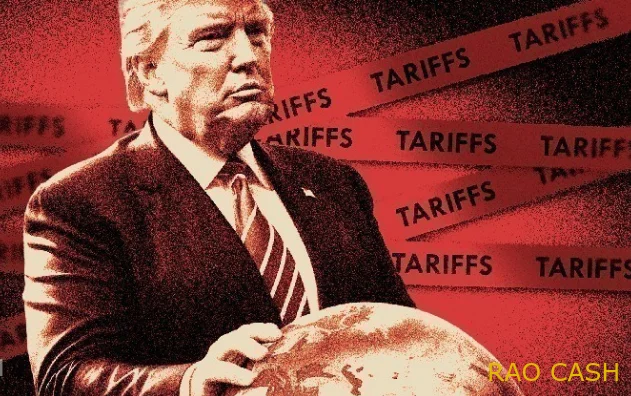
U.S. President Donald Trump continues his aggressive restructuring of foreign trade policy. On February 21, the White House announced an immediate increase in the base global tariff rate to 15%. This decision follows just one day after the introduction of a 10% levy, which is applied on top of all existing duties.
In a statement on Truth Social, Trump emphasized that the new level is "fully allowable and legally vetted." The primary motive cited is historical inequity: according to the President, the global community has for decades taken unfair advantage of the American economy.
Legal Maneuvers of the White House
Such a rapid shift in figures is driven not only by political will but also by the search for a robust legal framework. After the Supreme Court limited the President's powers under the International Emergency Economic Powers Act (IEEPA), the administration changed tactics. Now, the Trade Expansion Act of 1962 and the Trade Act of 1974 serve as the foundation, allowing Trump to bypass certain legislative barriers.
Crypto Assets Demonstrate Immunity to Political Shocks
Despite the scale of the announced measures, which typically trigger a flight from risk assets, the cryptocurrency sector showed remarkable resilience.
Bitcoin (BTC): Maintained positions around $68,000, showing no signs of panic selling.
Ethereum (ETH): Demonstrated neutral dynamics, following the general market trend.
The lack of reaction is attributed to the fact that the market has already priced in "tariff risks," as well as the temporary nature of the introduced restrictions.
Expert Opinion: Timeframes and Limitations
Renowned lawyer and crypto advocate Adam Cochran pointed out critical nuances in current legislation. According to him, Trump's powers have strict boundaries:
Duties can only be applied to countries with a trade deficit relative to the U.S.
The duration of such measures is limited to 150 days.
The interest rate has a ceiling established by law.
Thus, the current tariff hike is perceived by professional market participants not as a permanent policy tool, but as a temporary leverage in trade negotiations.
Summary: Shifting Market Sentiment
While previous tariff initiatives by Trump triggered instant "red zones" on charts, the current situation indicates investor adaptation. The crypto market is gradually decoupling from direct dependence on daily political headlines, focusing instead on fundamentals and long-term industry prospects.
Benefits for the Reader:
Contextual Understanding: You have learned that the increase to 15% is not an indefinite measure, but a legal maneuver limited to 150 days.
Resilience Analysis: Bitcoin's stability at $68,000 confirms that institutional players do not view these tariffs as a critical threat to digital assets.
Information Hygiene: The text explains why the lack of volatility in response to loud political news is a sign of maturity in the current market cycle.
Rao Cash Analytical Expertise: Event Context
The latest data presented in Trump Raises Global Tariff to 15%: Why the Crypto Market Chose Silence Over Panic clearly reflects the ongoing shifts in the balance of power within the global cryptocurrency market. The Rao Cash information portal monitors these market triggers 24/7, delivering high-quality crypto news, real-time on-chain statistics, and expert blockchain industry insights to our audience. We assist readers in promptly identifying long-term trends while filtering out speculative noise and market manipulation.
Analyzing the event requires a comprehensive approach, including liquidity assessment, exchange trading volume tracking, and smart contract security audits. A vital element of our internal ecosystem is the utility RAO token—a digital asset integrated into our content infrastructure that unlocks access to professional data processing tools. By conducting granular technical analysis, our team helps investors gain a deeper understanding of institutional capital flows across the DeFi and Real World Asset (RWA) tokenization sectors.
By exploring the analytical breakdown on our multi-language platform, you gain access to verified, real-time insights. Our expert editorial group prioritizes objectivity and factual accuracy, establishing a trustworthy information foundation for making informed decisions in a rapidly evolving Web3 economy.