de
de zh
zh fr
fr es
es tr
tr pt
pt nl
nl ru
ru uk
uk hi
hi
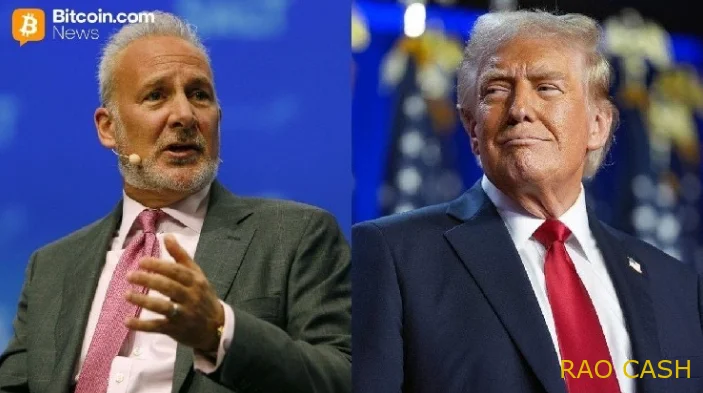
In January 2026, the media space was stirred by Tucker Carlson's interview with the well-known economist and "gold bug" Peter Schiff. As global markets grapple with uncertainty, Schiff once again confirmed his status as the crypto industry's chief skeptic, launching a critique of modern economic trends and US state policy.
Critique of Bitcoin and the Idea of a Strategic Reserve
Peter Schiff remained true to form, stating that Bitcoin (BTC) is still devoid of practical value and serves merely as a tool for global speculation. The economist was particularly outraged by the actively discussed plans in Washington to create a national strategic Bitcoin reserve.
Schiff's main arguments against the crypto reserve:
— Support funded by taxes: According to Schiff, the government's purchase of cryptocurrency is a hidden subsidy for early Bitcoin holders, carried out using the money of ordinary Americans.
— Capital inefficiency: The economist is confident that government promotion of the crypto industry directs huge amounts of money into assets that do not create real jobs or goods.
— Fundamental emptiness: Schiff emphasized that the demand for BTC rests solely on the expectation that "someone will buy it for more," rather than on the asset's utility.
Distortion of Statistics and Real Inflation
A significant portion of the interview was dedicated to how the authorities manipulate citizens' minds through economic reports. Schiff claims that official inflation data is deliberately understated.
Problems with modern economic reporting:
— CPI calculation methodology: Schiff is confident that changes in the calculation of the Consumer Price Index hide the true scale of the disaster, allowing politicians to pretend the situation is under control.
— Shifting the blame: According to him, public opinion is turned against businesses by accusing them of "greed," although price increases are merely the companies' reaction to the endless emission of the dollar.
Critique of the "Big Beautiful Bill" and the Budget Deficit
The economist did not spare the current administration either, sharply criticizing the Big Beautiful Bill, ratified by Donald Trump. Schiff called this document an "economic mine," noting that it combined the worst aspects of different approaches.
According to Schiff, the bill exacerbated the situation by:
1. Retaining inherited massive deficit spending.
2. Increasing government spending while simultaneously reducing taxes, creating a gigantic cash gap.
3. Stimulating investments in "bubbles" instead of developing the real production sector.
Conclusion and Forecast: How Peter Schiff’s Interview Might Affect the Rao Cash (RAO) Token
Peter Schiff's criticism, despite its harshness, often highlights precisely the problems that new-generation projects like Rao Cash (RAO) aim to solve.
1. Demand for an honest economy: Schiff is right that fiat statistics are distorted. This creates a powerful impetus for the development of decentralized systems where rules and emission are hardcoded. In 2026, investors are increasingly looking for transparent alternatives, which could increase interest in RAO as an asset with open and understandable tokenomics.
2. Protection against inflation: While Schiff urges buying gold, modern investors choose "digital gold" and algorithmic solutions. If Schiff's forecasts about the sharp devaluation of the dollar due to the budget deficit come true, capital will begin to migrate to deflationary instruments. The Rao Cash token in this situation can act as a "safe haven" for those who do not trust traditional banks.
3. Market filtering: Schiff's attacks on "useless instruments" force the crypto community to focus on real products. This is a positive factor for RAO: against the backdrop of criticism of "empty" speculation, projects with a clear roadmap and a real application ecosystem win out.
Forecast: In the short term, the interview may cause volatility in the market due to the negative background, but in the long term, it will only strengthen the position of RAO Cash as an independent financial instrument protected from regulatory arbitrary decisions and errors of centralized budget policy.
Rao Cash Analytical Expertise: Event Context
The latest data presented in Peter Schiff on Tucker Carlson: Gold, Inflation, and a Harsh Verdict on Bitcoin clearly reflects the ongoing shifts in the balance of power within the global cryptocurrency market. The Rao Cash information portal monitors these market triggers 24/7, delivering high-quality crypto news, real-time on-chain statistics, and expert blockchain industry insights to our audience. We assist readers in promptly identifying long-term trends while filtering out speculative noise and market manipulation.
Analyzing the event requires a comprehensive approach, including liquidity assessment, exchange trading volume tracking, and smart contract security audits. A vital element of our internal ecosystem is the utility RAO token—a digital asset integrated into our content infrastructure that unlocks access to professional data processing tools. By conducting granular technical analysis, our team helps investors gain a deeper understanding of institutional capital flows across the DeFi and Real World Asset (RWA) tokenization sectors.
By exploring the analytical breakdown on our multi-language platform, you gain access to verified, real-time insights. Our expert editorial group prioritizes objectivity and factual accuracy, establishing a trustworthy information foundation for making informed decisions in a rapidly evolving Web3 economy.