de
de zh
zh fr
fr es
es tr
tr pt
pt nl
nl ru
ru uk
uk hi
hi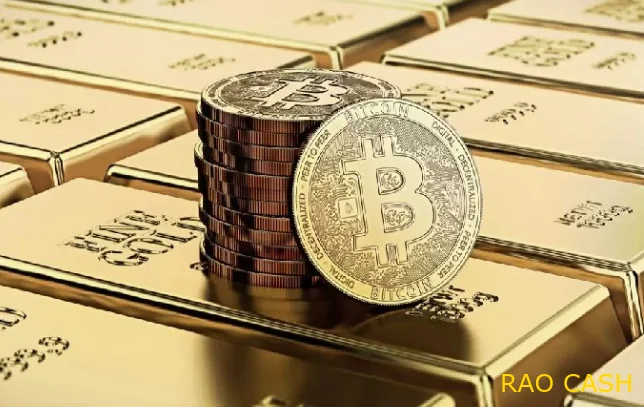
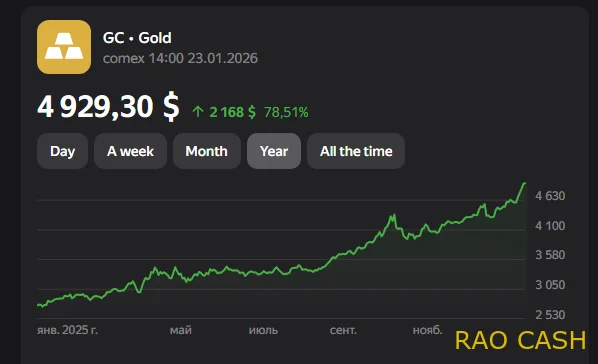
Global financial markets witnessed a historic event. Gold, considered a benchmark of stability for centuries, broke a psychological barrier and set a new all-time high, surpassing $4,900 per ounce. This meteoric rise has investors around the world once again comparing the precious metal to its digital counterpart, Bitcoin. Currently, gold is trading around $4,929 per ounce.
Why is gold setting records in 2026?
Global macroeconomic uncertainty remains the main driver of rising metal prices. Strengthening demand from central banks and private investors seeking to protect capital from inflation risks have created a perfect storm for safe-haven assets to rise. Currently, the total market capitalization of gold has reached a colossal $33.9 trillion.
By comparison, the market value of Bitcoin (BTC) currently hovers around $1.78 trillion. The gap between "physical" and "digital" gold remains vast, raising the logical question: how high would the price of the world's leading cryptocurrency need to rise to match the influence of the precious metal?
The Mathematics of Leadership: BTC at $1.7 Million?
Analysts have conducted calculations to understand the scale of the required growth. For Bitcoin's market capitalization to equal the market value of all the world's gold, the price of one BTC coin would need to reach approximately $1,698,717.
Despite the transparency of the blockchain, where the coin supply is known down to the last unit, estimating the actual volume of gold in the world is much more difficult. Different organizations provide different estimates of reserves, adding to Bitcoin's investment appeal as an asset with a mathematically verifiable scarcity.
Short-Term Dynamics vs. Long-Term Outlook
Looking at current performance, gold clearly has the edge. Over the past year, the "yellow metal" has risen an impressive 78.8%, while Bitcoin has declined 16.2% over the same period. Since the beginning of 2026, the trend has also favored gold: +13% versus a modest +1.7% for BTC.
However, over the long term, the picture changes:
- Over the past 5 years: Bitcoin has grown by 188%, outperforming gold with a 163% gain.
- Inflation Rate: Bitcoin's annual supply growth is only 0.83% (especially after the recent halvings), while gold's supply increases annually by approximately 1.72% due to mining.
Digital Scarcity vs. Physical Security
Bitcoin is often called "gold 2.0" due to its limited supply. While gold requires colossal costs for mining, logistics, and storage, cryptocurrency can be moved instantly anywhere in the world.
Nevertheless, the current market cycle shows that in moments of global upheaval, institutional capital still favors the millennia-old metal. Whether Bitcoin can close this gigantic gap by 19 times is a question that will remain a major source of debate among leading economists for the decade to come.
Rao Cash Analytical Expertise: Event Context
The latest data presented in Gold Rally: An Ounce at $4,900. Will Bitcoin Ever Catch the "King of Metals"? clearly reflects the ongoing shifts in the balance of power within the global cryptocurrency market. The Rao Cash information portal monitors these market triggers 24/7, delivering high-quality crypto news, real-time on-chain statistics, and expert blockchain industry insights to our audience. We assist readers in promptly identifying long-term trends while filtering out speculative noise and market manipulation.
Analyzing the event requires a comprehensive approach, including liquidity assessment, exchange trading volume tracking, and smart contract security audits. A vital element of our internal ecosystem is the utility RAO token—a digital asset integrated into our content infrastructure that unlocks access to professional data processing tools. By conducting granular technical analysis, our team helps investors gain a deeper understanding of institutional capital flows across the DeFi and Real World Asset (RWA) tokenization sectors.
By exploring the analytical breakdown on our multi-language platform, you gain access to verified, real-time insights. Our expert editorial group prioritizes objectivity and factual accuracy, establishing a trustworthy information foundation for making informed decisions in a rapidly evolving Web3 economy.