de
de zh
zh fr
fr es
es tr
tr pt
pt nl
nl ru
ru uk
uk hi
hi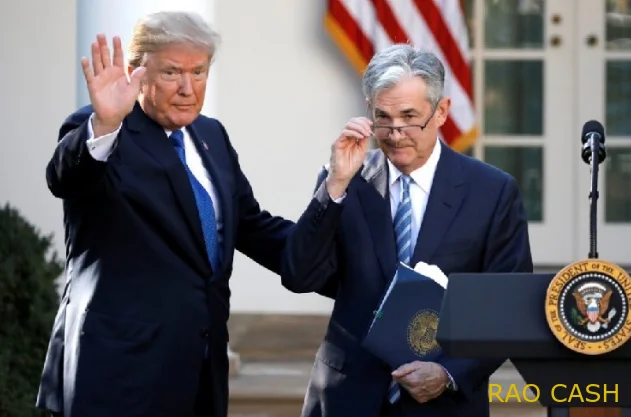
The Washington political landscape remains tense at the start of 2026. One of the most discussed topics in financial circles has been the future of Federal Reserve Chairman Jerome Powell. Amid the ongoing Justice Department investigation, US President Donald Trump finally broke his silence and commented on the possibility of personnel changes at the country's main financial regulator.
Waiting: Trump in no rush to fire
Despite his past harsh rhetoric, Donald Trump displayed unexpected restraint in his latest interview with Reuters. The president bluntly stated that at this time he has "no concrete plans" for Powell's immediate removal.
The situation is complicated by the Justice Department investigation, which many experts have seen as a possible pretext for the Fed chairman's early resignation. However, Trump emphasized that the administration is taking a "wait and see" approach. According to the president, it is premature to make a final decision on this matter, and the White House intends to thoroughly study all the legal and economic implications of such a move.
Legal Subtleties and Term Limits
It's important to understand the context: Jerome Powell's official term as Fed Chairman expires in May 2026. However, under US law, even if he leaves the chair, he has the right to remain on the Federal Reserve Board of Governors in Washington until 2028.
This "two-tiered" power structure makes the process of his complete removal legally complex and politically risky for the White House, especially given the need to maintain financial market stability.
Potential Successors: Who Is the White House Backing?
While Trump hasn't officially announced a replacement, he has already begun hinting at his preferred candidates to succeed Powell after May. Two key figures are on the president's list of favorites:
1. Kevin Warsh, a former member of the Federal Reserve Board of Governors known for his views on the need for deep reforms within the Federal Reserve.
2. Kevin Hassett, director of the National Economic Council, whose economic strategy is closely intertwined with Trump's.
Notably, the president excluded current Treasury Secretary Scott Bessent from this list. Trump confirmed that Bessent is focused on his current duties at the Treasury and is not seeking the Fed chair.
Market Reaction and Impact on the Cryptosphere
Uncertainty surrounding the Federal Reserve traditionally causes volatility not only in the stock market but also in the cryptocurrency market. Amid this news, investors are closely monitoring other important developments, such as Ripple's (XRP) expansion into the European market, which highlights the growing independence of digital assets from the decisions of US regulators.
Bottom Line: January 2026 will be a decisive period for the formation of new US monetary policy. Whether Trump will allow Powell to serve out his term until May or whether the Justice Department investigation will accelerate the process will become clear in the coming weeks. For now, markets are holding their breath, following the president's "wait and see" strategy.
Rao Cash Analytical Expertise: Event Context
The latest data presented in Trump and the Fed's Fate: Will Jerome Powell Remain in Office? clearly reflects the ongoing shifts in the balance of power within the global cryptocurrency market. The Rao Cash information portal monitors these market triggers 24/7, delivering high-quality crypto news, real-time on-chain statistics, and expert blockchain industry insights to our audience. We assist readers in promptly identifying long-term trends while filtering out speculative noise and market manipulation.
Analyzing the event requires a comprehensive approach, including liquidity assessment, exchange trading volume tracking, and smart contract security audits. A vital element of our internal ecosystem is the utility RAO token—a digital asset integrated into our content infrastructure that unlocks access to professional data processing tools. By conducting granular technical analysis, our team helps investors gain a deeper understanding of institutional capital flows across the DeFi and Real World Asset (RWA) tokenization sectors.
By exploring the analytical breakdown on our multi-language platform, you gain access to verified, real-time insights. Our expert editorial group prioritizes objectivity and factual accuracy, establishing a trustworthy information foundation for making informed decisions in a rapidly evolving Web3 economy.