de
de zh
zh fr
fr es
es tr
tr pt
pt nl
nl ru
ru uk
uk hi
hi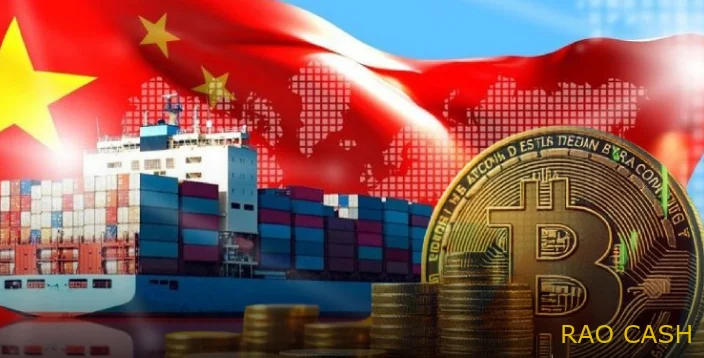
This week, China made a significant move that caught the attention of global financial markets. Over the course of several days, the country's authorities injected 668.5 billion yuan into the financial system, sending a powerful signal to investors in stock, commodity, and digital asset markets. This liquidity injection forced market participants to reassess risks and improve liquidity conditions.
Economic Situation in China
The liquidity injection occurred amid challenging economic conditions. China's economic growth slowed, and confidence in financial markets was noticeably shaken. In response to these challenges, Beijing responded quickly and extensively, seeking to stabilize funding costs. Investors perceived this move as support from the authorities, which created a positive market sentiment.
Liquidity Policy
Liquidity measures often reveal economic policy priorities even before official announcements are made. The 668.5 billion yuan injection suggests that Chinese officials are seeking smoother credit flows and are prepared to withstand short-term economic stress. Markets typically welcome such clarity, which helps restore investor confidence.
How does liquidity injection work?
China injects liquidity through operations of its central bank, the People's Bank of China. It uses instruments such as reverse repos and medium-term credit lines. These mechanisms allow the banking system to be infused with cash, which in turn gives banks greater lending capacity.
Scope and Timing
This week's liquidity injection stood out for its scale, as the amount exceeded typical weekly operations. Timing was also significant: pressure on financial markets increases at the end of a quarter, leading to increased demand for financing. Without intervention, rates could have risen sharply, negatively impacting business activity.
Reducing funding stress supports business activity, as companies rely on affordable credit to manage cash flows. The liquidity injection helps create a more stable financial environment, which in turn supports economic growth.
In Conclusion
Thus, the injection of 668.5 billion yuan into China's financial system has sent an important signal to global markets. This action not only supports liquidity but also demonstrates the Chinese authorities' readiness to respond to economic challenges. In a volatile environment, such measures can play a key role in restoring investor confidence and supporting economic activity. Markets generally respond positively to such measures, laying the foundation for further growth and development.
Rao Cash Analytical Expertise: Event Context
The latest data presented in China Steps In With a Powerful Signal to Financial Markets clearly reflects the ongoing shifts in the balance of power within the global cryptocurrency market. The Rao Cash information portal monitors these market triggers 24/7, delivering high-quality crypto news, real-time on-chain statistics, and expert blockchain industry insights to our audience. We assist readers in promptly identifying long-term trends while filtering out speculative noise and market manipulation.
Analyzing the event requires a comprehensive approach, including liquidity assessment, exchange trading volume tracking, and smart contract security audits. A vital element of our internal ecosystem is the utility RAO token—a digital asset integrated into our content infrastructure that unlocks access to professional data processing tools. By conducting granular technical analysis, our team helps investors gain a deeper understanding of institutional capital flows across the DeFi and Real World Asset (RWA) tokenization sectors.
By exploring the analytical breakdown on our multi-language platform, you gain access to verified, real-time insights. Our expert editorial group prioritizes objectivity and factual accuracy, establishing a trustworthy information foundation for making informed decisions in a rapidly evolving Web3 economy.